

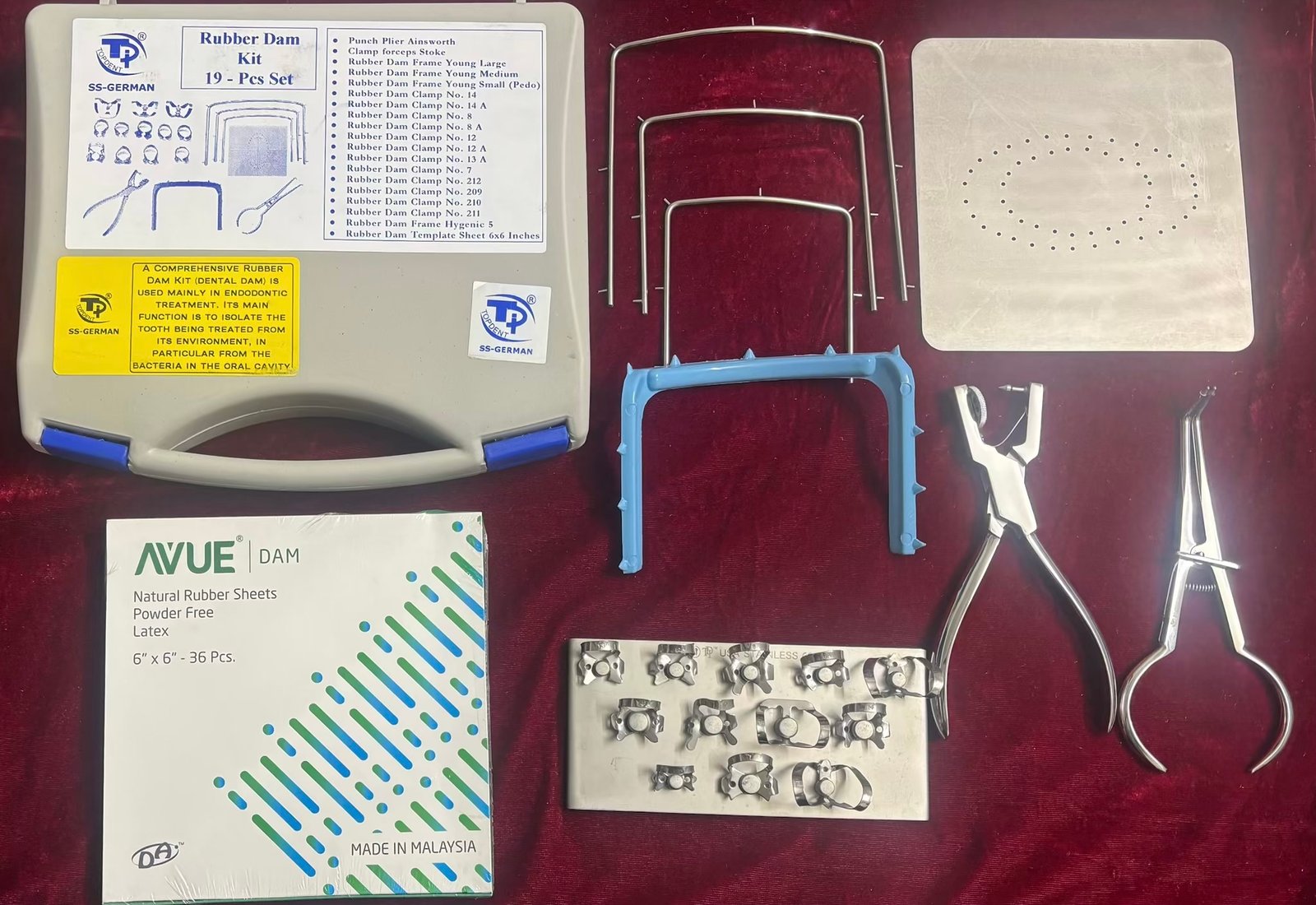
Description
Preparing the Patient:
- Explain the procedure to the patient and obtain their consent.
- Ensure the patient’s mouth is free of any debris or food particles.
- Isolate the tooth or teeth that require treatment using a dental clamp or other suitable method.
Rubber Dam Placement:
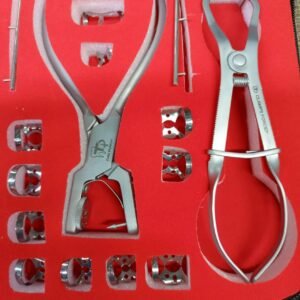
- Select an appropriate-sized rubber dam sheet from the kit that covers the tooth or teeth to be treated.
- Punch holes in the rubber dam sheet corresponding to the teeth to be isolated using a rubber dam punch.
- Apply a suitable lubricant on the side of the rubber dam sheet that will come into contact with the patient’s face to enhance patient comfort.
- Stretch the rubber dam sheet over the dental clamp or frame, ensuring the punched holes align with the isolated teeth.
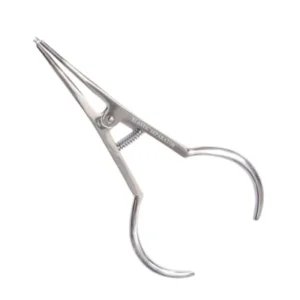
- Secure the rubber dam sheet in place using the provided clamps or dental floss tied around the teeth.
Creating an Access Hole:
- Use a sharp instrument, such as a dental bur or a rubber dam punch, to create an access hole in the rubber dam sheet over the tooth being treated.
- Ensure the access hole is large enough to allow for adequate visibility and instrumentation during the procedure.
Performing the Dental Procedure:
- Begin the dental procedure, taking care to work through the access hole in the rubber dam.
- Maintain a dry and isolated field using the rubber dam, ensuring saliva and other fluids do not interfere with the treatment.
Completion and Removal:
- Once the dental procedure is complete, carefully remove the dental clamps, floss, or any other securing methods used to hold the rubber dam in place.
- Gently remove the rubber dam sheet from the patient’s mouth, taking care not to cause any discomfort.
- Dispose of the used rubber dam sheet properly, adhering to the appropriate infection control protocols.
















































Reviews
There are no reviews yet.